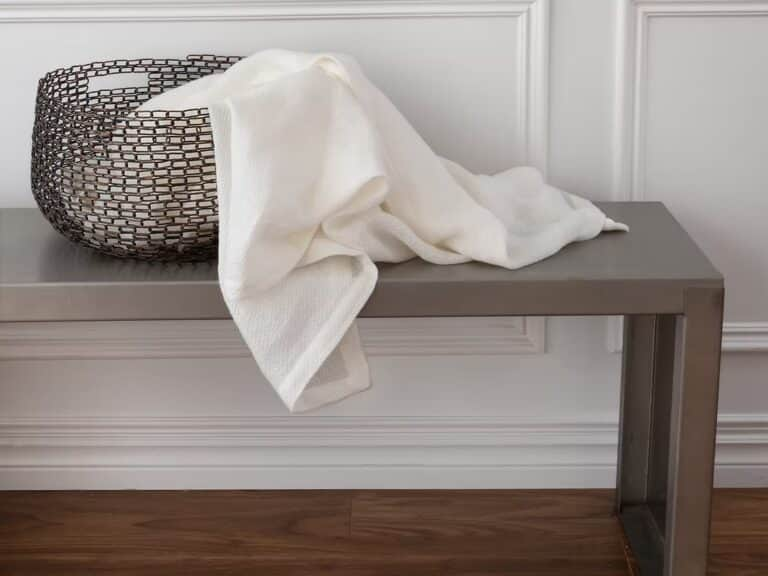
Bath textiles · A practical guide
Flat-Weave or Terry? A Guide to Choosing Bath Towels for Your Routine
The towel you reach for after a shower can change the feel of the whole moment. Plush terry offers a soft, enveloping finish; a flat-weave towel is lighter, easier to pack, and often quicker to dry. The best choice isn’t a contest—it’s the one that fits your bathroom, habits, and idea of comfort.
Published October 30, 2026
Bath towels do more than absorb water. Their weave and fiber determine how they feel against the skin, how much space they take up, and whether they’re ready for another use by morning. That’s why two towels of similar size can behave very differently: one may feel like a cushioned wrap, while another dries with a lighter, more streamlined touch.
The difference often begins with construction. Terry towels have loops that create a familiar plush pile and offer plenty of surface area to take up moisture. Flat-weave towels have a flatter, more compact structure, which generally makes them lighter and less bulky. Linen foutas are a well-known example. Neither style is automatically better. For a busy household, softness and generous coverage may come first; for travel, a small bathroom, or a warm climate, quick drying and easy storage may be the bigger win.
First, what does “weave” mean for a towel?
Weave describes how threads are arranged to make fabric. In a terry towel, loops rise from the base cloth and form its distinctive soft, textured surface. Those loops provide additional area for contact with water, which helps explain why terry is a go-to construction for everyday bath towels. It can feel cozy and substantial, especially when the pile is dense.
A flat-weave towel has a flatter surface, without the same deep loops. The result is typically a lighter towel that folds down neatly and allows air to move through the fabric more readily. This can help it dry quickly between uses, though the exact experience depends on fiber, fabric density, towel size, and where it hangs. Flat-weave doesn’t mean “not absorbent”; it means the towel is built differently and may feel less plush than terry.
Think of weave as one part of a bigger picture. Fiber content, dimensions, thickness, finishing, and laundering all influence performance. A towel’s label and care instructions can tell you more than a quick squeeze in a shop ever could.
Terry towels: plush, familiar, and comforting
For many people, the ideal bath towel is the one that feels soft and substantial after stepping out of the shower. Terry’s looped pile brings that enveloping quality. It can offer a cushioned feel and a reassuring sense of coverage, especially in a cool bathroom or after a long bath.
That fuller construction can also mean extra laundry-room considerations. A thick towel takes up more space in a washing machine and may require more time to dry than a lighter, flatter style. If several people share a bathroom, towels are used frequently, or ventilation is limited, the time between washes and the place where towels hang become relevant parts of the decision. A towel that stays damp for too long may not feel fresh when you reach for it again.
Terry is worth considering if you like a plush hand feel, want a traditional bath-towel experience, or prioritize a thick, cozy wrap. To keep it working well, give it room to dry between uses and follow the manufacturer’s care instructions. Avoid assuming that more detergent or fabric softener will improve softness: product buildup can affect how fabric performs, so use detergent as directed and check the towel’s label.
Flat-weave towels: light on the shelf, ready for a change of scene
Flat-weave towels make a strong case when convenience matters. They often fold into a smaller bundle than bulky terry styles, leaving more room in a linen cupboard, gym bag, or suitcase. Their lighter structure can also make them a practical option for people who prefer towels that dry quickly after use.
Linen is one fiber used for flat-weave towels. It has a distinctive natural texture and a relaxed appearance, and linen foutas are designed to serve more than one purpose. Depending on size and construction, a towel might travel from bathroom to beach, sauna, or poolside. A large format can offer generous coverage while remaining relatively easy to carry.
Flat-weave styles feel different from terry: less like a plush robe and more like a light, flexible cloth. Some people love that crisp, breathable quality; others miss the softness and thickness of a looped pile towel. If you are unsure, consider where and how you will use the towel rather than judging it only by touch. For a compact travel towel, a lighter feel can be an advantage. For a chilly morning routine, you may prefer a thicker wrap.
For example, The Belgian Towel Fouta Flax stripe is a 100% linen fouta measuring 43 by 71 inches. Its flat-weave, washed finish and multipurpose design make it relevant to bath and travel routines alike. Its care guidance recommends washing with similar colors, avoiding chlorine bleach, and line drying when possible; the product information also notes that steam ironing is best when the linen is slightly damp. These details illustrate why a towel’s care requirements belong in the choice—not as an afterthought.
Absorbency isn’t just about thickness
A thick towel can feel highly absorbent, but thickness alone doesn’t tell the full story. Fiber, weave, density, and finishing all play a role. A towel’s ability to take up moisture is not the same thing as how quickly it dries afterward, either. The first is about what happens when fabric meets water; the second also depends on airflow, humidity, warmth, and how the towel is hung.
That distinction helps explain why people can have different preferences without either being mistaken. One person may value a towel that feels instantly soft and substantial. Another may favor a lighter towel that is simple to pack and less cumbersome to launder. Both are choosing for a different part of the experience.
Care instructions provide useful clues about how to maintain a towel’s intended performance. For linen, gentle washing and avoiding chlorine bleach are common recommendations, but always follow the label for the specific item. If your towel is slow to dry, try spreading it fully on a rail or hook with airflow around it instead of folding it over a crowded bar.
How to choose by routine
The best bath towels are the ones that work in the context of your real day—not an idealized bathroom with endless storage and a dedicated laundry schedule. Ask yourself a few practical questions before choosing:
- Do you want a plush wrap? Terry may be the more satisfying choice if softness and a thick, cozy feel are priorities.
- Is drying time important? A lightweight flat-weave style can be a useful option when towels need to dry between frequent uses, although room conditions matter.
- Are you short on storage? Flat-weave towels generally fold down more compactly and can make a small linen cupboard easier to manage.
- Will you travel with it? A lighter towel is often more convenient to carry than a bulky one, particularly for beach, pool, or sauna visits.
- Do you share a bathroom? Consider how many towels are in circulation, how often laundry is done, and whether there is enough space for each towel to dry fully.
- How much care are you comfortable with? Check washing and drying instructions before settling on a material or finish.
A useful approach is to assign towels different jobs. You might keep plush terry for the main bath and choose a lighter flat-weave towel for travel, the gym, or a guest room. A home does not have to pick a single team. Matching the towel to the task can make everyday routines simpler and reduce the pressure to find one style that does everything equally well.
Consider size, weight, and bathroom space
Dimensions shape the way a towel works. A larger bath sheet gives more coverage but needs more room to hang and wash. A standard bath towel may be easier to store and handle. For travel, a generous flat-weave towel can provide useful coverage without the bulk of a thick, high-pile alternative. Compare measurements with your own needs rather than relying on a product name alone, since size terms are not always consistent between makers.
Weight is another consideration, especially when shopping online. Some towel specifications use GSM, or grams per square meter, as a measure of fabric weight. A higher number generally indicates a heavier, denser towel, but it is not a universal score for softness or quality. Fiber and construction still matter. When GSM is not listed, look for clear information about material, weave, size, and care.
In a compact bathroom, a towel that is easy to spread out may be more useful than one that is simply small. Air needs access to the fabric if it is to dry between uses. Look at where the towel will hang: a door hook, narrow rail, or crowded towel bar may influence which shape and thickness feels manageable.
Care habits that help towels last
Even a well-made towel can lose its appeal if it is routinely left damp, washed carelessly, or crowded in the machine. Thoughtful maintenance is straightforward: check the care label, avoid overloading the washer, and let towels dry fully between uses. Follow recommended wash temperatures and drying methods instead of applying the same settings to every textile in the household.
For linen foutas, product guidance commonly favors gentle washing, mild soap, and line drying where possible. Some instructions allow a medium-temperature tumble dry, while others recommend a particular temperature or cycle. Because finishes and construction vary, the safest rule is simple: use the care directions supplied for your towel. Avoid chlorine bleach when the manufacturer advises against it, and wash similar colors together to help preserve their appearance.
For terry towels, allow enough room in the dryer or on the line for air to circulate. If towels feel less absorbent over time, consider whether detergent residue or fabric softener buildup might be contributing. Use appropriate amounts of detergent and follow care guidance. A towel needs neither elaborate treatment nor excessive products to become part of a dependable routine.
A quick comparison
| What matters | Terry | Flat-weave |
|---|---|---|
| Feel | Looped, plush, and often cushioning | Flatter, lighter, and more streamlined |
| Storage | Can be bulkier, especially in thicker styles | Often folds into a compact bundle |
| Drying between uses | Depends on pile, airflow, and room conditions | Lightweight construction can support quicker drying |
| Good fit for | People who value a cozy, traditional bath towel | Travel, smaller storage spaces, or a lighter feel |
This comparison is a starting point, not a promise that every towel in a category behaves identically. A dense flat weave and a lightweight terry towel can narrow the differences. The material, finishing, dimensions, and setting all count.
The bottom line: choose the towel you’ll enjoy using
Terry and flat-weave towels answer different needs. Terry is the familiar choice for a plush, comforting feel; flat-weave styles offer a lighter alternative that can be convenient to store, carry, and dry. Linen foutas bring that compact, versatile character to everyday bathing and travel, while a heavier towel may feel more inviting when you want an enveloping wrap.
Before making a choice, look past softness alone. Check the fiber content, weave, dimensions, weight information if available, and care instructions. Then picture the towel in its actual setting: hanging in your bathroom, going into your laundry, or folded into a bag. That small moment of practical thinking can lead to a much better match.
There is no single perfect bath towel for every person or home. There is only the one that fits your routine—whether that means sinking into plush terry after a long shower or reaching for a light linen fouta that is ready to travel when you are.

