Bedding basics
Coyuchi Sheets: How Fiber, Weave, and Care Shape Comfort
The best sheet is not simply the one that feels soft in a store. Fiber, weave, finishing, fit, and laundry habits all help determine whether bedding feels cool, crisp, smooth, or relaxed night after night. Looking at Coyuchi sheets offers a useful starting point for learning what to compare—without assuming that a brand name alone tells the whole story.
Start with the fabric, not the first impression
Sheets are among the textiles we live with most closely. They warm up with the body, take on moisture, brush against skin, and pass through the washing machine again and again. A pleasant hand matters, but it is only one piece of the comfort equation. The fiber establishes many of the fabric’s basic characteristics; the weave shapes its surface and structure; and finishing and care influence how those qualities evolve.
When people search for Coyuchi sheets, they may be looking for a particular brand, a material, or a certain feel. The most useful way to evaluate any sheet—including one from Coyuchi—is to read the item’s own specification and care label. Product names and general brand descriptions are not substitutes for checking fiber content, construction, weight or thread-count information where supplied, and washing instructions. Materials and details can differ between styles, so it is wise to assess each sheet on its own terms.
That approach also makes it easier to compare bedding from different makers. A crisp cotton percale, a smooth cotton sateen, and a softly rumpled linen sheet can all be well made, yet feel quite different on the bed. The right choice is less about a universal ranking and more about the combination that suits your temperature, tactile preferences, climate, and household routine.
Fiber: the foundation of sheet comfort
Fiber is the raw material spun into yarn and woven or knitted into fabric. Cotton and flax linen are common natural fibers in bedding, while silk and other materials may also appear. Each has distinctive qualities, but fiber labels should be read as information, not as an automatic promise of a particular level of comfort. Yarn quality, fabric construction, finishing, and use all matter too.
Cotton: familiar, adaptable, and weave-dependent
Cotton is widely used for sheets because it can be made into a broad range of fabrics. Depending on the yarn and weave, cotton bedding may feel crisp and matte, smooth and fluid, or light and easy to launder. Long-staple cotton refers to fibers that are longer than average; in appropriate yarns, longer fibers can support a smoother, more durable fabric. Still, fiber length is only one detail. It does not tell you by itself how a finished sheet will feel or how it will perform in your home.
For an example of how cotton specifications can be presented, the Luna Flat Sheet is described as 100% long-staple cotton sateen with a 600 thread count and an Italian origin. Its stated care instructions call for a lukewarm wash on a delicate cycle, low-temperature tumble drying, and no bleach. Those details give a reader something concrete to evaluate: fiber, weave, count, origin, and maintenance guidance. They do not establish that the sheet is the right choice for every sleeper.
Linen: texture, airflow, and a relaxed character
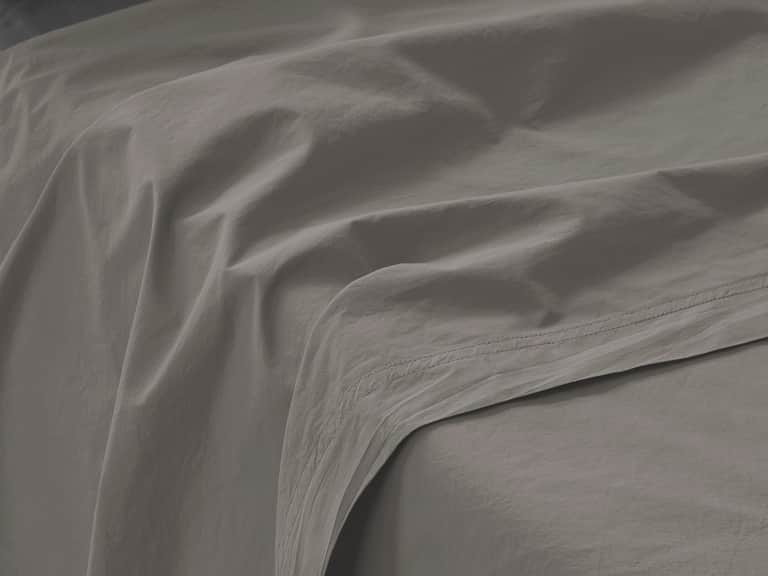
Linen is made from flax. It is often chosen for its distinctive texture, casual drape, and breathable feel. Linen wrinkles readily, and many people value that soft, lived-in appearance rather than treating it as a flaw. The fabric can also soften with use and laundering, although the pace and degree depend on the yarn, weave, finishing, and care.
Statements such as “cooling” or “temperature regulating” are common in descriptions of linen bedding, but individual comfort depends on more than fiber. Room temperature, humidity, duvet weight, mattress materials, and personal sleep patterns all play a part. If you are comparing linen with cotton while considering Coyuchi sheets or another brand, look for the exact fiber content and any care restrictions, then consider whether the texture and wrinkle behavior suit your preferences.
Fiber labels deserve a careful read
A sheet described as cotton, linen, or a blend may have additional finishing or construction details that affect its feel. Check whether the label says 100% of a fiber or identifies a blend. Look for information about the fabric’s origin and any claimed certification, and confirm what the certification applies to. A certification can address defined aspects of production, but it does not by itself guarantee a particular hand, fit, or lifespan.
Weave is what turns fiber into a surface
Weave describes how yarns cross each other to form a woven fabric. It changes the way a sheet looks, drapes, and feels against the skin. Two sheets made from the same fiber can have distinctly different personalities when their weaves differ. This is why “cotton sheet” is not a complete description of what sleeping on it will be like.
Percale: a crisp, matte feel
Percale is commonly associated with a closely balanced plain weave and a crisp, matte surface. Many people like the fresh, cool-to-the-touch impression and the way percale feels less glossy than sateen. It can wrinkle, especially after washing and line drying, and its crispness may soften as it is used. The exact feel depends on the yarn, finishing, and fabric weight—not simply the word “percale.”
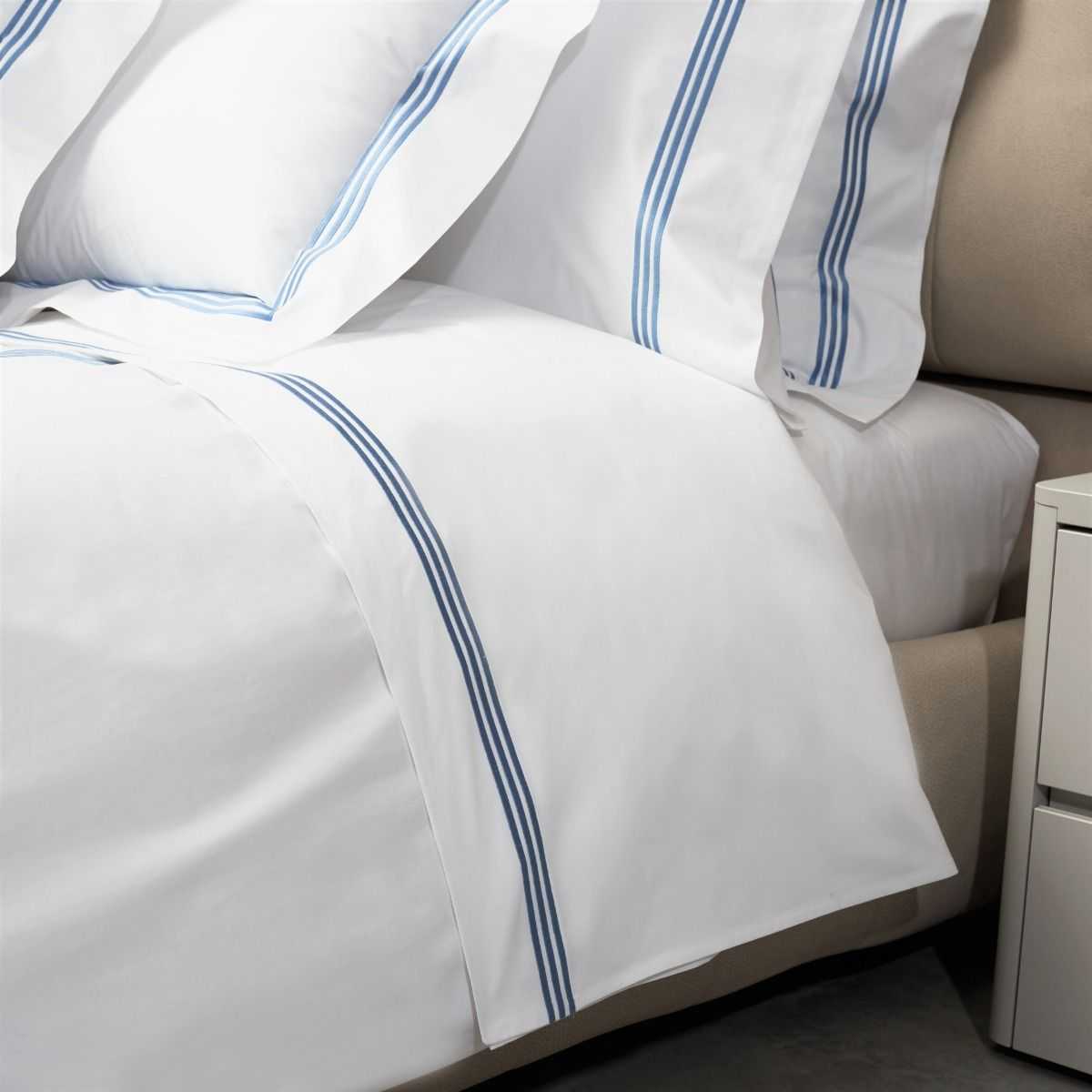
The Platinum Flat Sheet, for example, is described as long-staple cotton percale, made in Italy, with embroidered detailing. Its care information recommends a lukewarm delicate wash, mild detergent, and low tumble-dry heat. The embroidered lines are a design feature; the percale construction is the more relevant detail when considering surface feel.
Sateen: smoothness and drape
Sateen generally has a smoother, often slightly lustrous surface than percale. Its drape may feel more fluid, which appeals to sleepers who prefer a silky hand over a crisp one. That smoothness does not automatically mean it will be too warm or too delicate; performance depends on the complete fabric and the conditions in which it is used. Compare care instructions closely, as some sateen sheets call for gentler washing and drying than a person’s everyday laundry routine might allow.
Linen weaves and the feel of texture
Linen can be woven in different weights and structures, from lighter fabrics to more substantial cloth. The texture may be more apparent than in smooth cotton sateen, and the drape can look relaxed rather than sharply pressed. If the product description uses terms such as washed, garment-dyed, or stonewashed, those describe finishing processes that can influence the surface and appearance. They are useful clues, but the care label remains the practical guide for laundering.
Thread count sometimes appears prominently in bedding descriptions, but it is not a standalone measure of comfort or quality. It counts yarns in a defined area under a particular method; it does not fully convey fiber quality, weave, finishing, or fabric weight. When comparing sheets, use thread count as one specification among several, not as the deciding scorecard.
What to check on a sheet label
A care label is a small document with a big job: it helps you maintain a textile in the condition its maker recommends. Before buying or washing sheets, look for the following details. If a product page and sewn-in label appear to differ, follow the label attached to the actual item and ask the maker for clarification when needed.
- Fiber content: Check whether the fabric is cotton, linen, a blend, or another material, and note the stated percentages.
- Weave and construction: Look for terms such as percale or sateen, and distinguish those from decorative details such as embroidery or a hem.
- Washing temperature: Find the recommended maximum temperature and whether a delicate cycle is specified.
- Detergent and bleach guidance: Mild detergent may be recommended; chlorine bleach is frequently discouraged, particularly for delicate or colored textiles.
- Drying instructions: Check whether line drying is preferred, tumble drying is allowed, and what heat setting is suitable.
- Ironing advice: Some sheets are intended to be pressed; others are designed to look relaxed. Instructions may specify ironing while damp or using steam.
- Fit and dimensions: For fitted sheets, compare mattress dimensions and depth with pocket measurements, including any pillow-top or topper.
- Care symbols: If the symbols are unfamiliar, consult a reliable laundry-symbol guide rather than guessing.
Brand-specific questions are worth answering at the item level. For Coyuchi sheets, as with any bedding, verify the composition and instructions for the exact style you are considering. A general impression of a brand cannot tell you whether a particular sheet is linen or cotton, how it is woven, or whether it belongs in a hot wash.
Washing habits that help sheets last
Regular laundering is part of comfortable bedding, but rough handling can place unnecessary stress on fibers, seams, elastic, and color. A sensible routine begins with the care label, then applies a few steady habits: avoid overloading the machine, use an appropriate amount of detergent, and wash similar colors together. A packed drum can limit movement and rinsing, while too much detergent can leave residue that affects the hand of the fabric.
Choose the temperature the label recommends. Hotter water is not automatically better; it can increase energy use and may contribute to wear or color fading in some textiles. Cooler or lukewarm washing may be suitable for many routine loads, but hygiene needs and product instructions vary. Where bedding has been exposed to illness, body fluids, or other specific concerns, follow relevant health guidance and the textile’s care directions.
Use a gentle or delicate cycle when instructed, particularly for finer fabrics, decorative stitching, or sheets with a delicate finish. Keep bedding separate from items with hooks, zippers, or rough surfaces that could snag it. Avoid chlorine bleach unless the label explicitly permits it. If you use a stain treatment, test it in an inconspicuous area when appropriate and follow the product directions as well as the sheet’s label.
Dry with less heat and less delay
High heat and over-drying can make laundering harder on many fabrics. If tumble drying is allowed, choose the recommended setting and remove sheets promptly once dry or slightly damp, depending on the instructions. This can help reduce deep creasing and limit the time fabric spends tumbling after it has dried. Line drying is a useful alternative when space and weather allow, though direct sunlight can affect some colors over time.
For linen, the desired finish matters. If you like its natural creases, there may be no need to iron. If you prefer a neater surface, the label may recommend steam or pressing while slightly damp. For cotton sateen or percale, follow the product-specific instructions rather than assuming every cotton sheet can be treated alike.
Store clean, fully dry bedding
Before putting sheets away, make sure they are thoroughly dry. Store them in a clean, dry place with enough room for air to circulate. Avoid sealing damp fabric in a container, and take care not to compress bedding beneath heavy items for long periods. A rotation between sets spreads wear across more than one sheet set and means there is a clean change available while another set is in the wash.
Choose for your sleep habits, not a trend
There is no single “best” sheet weave for every household. Someone who prefers a smooth, flowing hand may gravitate toward sateen. A sleeper who likes a crisp, matte finish may prefer percale. Linen may suit someone who enjoys visible texture and a relaxed look. These are tendencies, not rules, and the way a sheet feels can change after repeated washing.
Think about your normal room temperature and bedding layers, but avoid treating fabric claims as a substitute for your own experience. A heavy comforter can make a bed feel warm regardless of the sheet, while a cool room and lighter covers may change how a fabric feels overnight. If possible, assess fabric samples or read a clear return policy before making a decision. Reviews can help reveal patterns in fit or care, but individual preferences differ.
Also consider practical fit. A fitted sheet that is too shallow may pull loose, while an oversized pocket can shift or bunch. Check mattress measurements, depth, and any topper before choosing a size. Flat sheets should provide enough width and length for your preferred tuck. Small details such as elastic placement, seam quality, and finished hems matter in everyday use because they affect how easily the bed can be made and how the fabric stands up to routine handling.
A straightforward comparison checklist
When comparing Coyuchi sheets with other options, keep the decision grounded in observable details. A short checklist can make a crowded product page easier to navigate:
- Does the fiber content match what you want to sleep on?
- Does the weave suggest the surface feel you prefer?
- Are fabric weight, thread count, or other specifications clearly stated—and are you treating them as context rather than a quality guarantee?
- Will the recommended washing and drying method fit your household routine?
- Do the sheet dimensions and fitted-pocket depth suit your mattress?
- Are claims about certification or sourcing clearly defined and relevant to the particular item?
- Would you be comfortable with the fabric’s natural wrinkles, texture, and changes after laundering?
Using the same questions across brands helps separate substance from styling. For instance, a smooth cotton sateen sheet and a crisp cotton percale sheet may share a fiber label but offer different tactile experiences. A linen sheet may have its own appealing character, yet call for different expectations about wrinkles and texture. Comparing like with like—fiber, weave, finish, care, and fit—creates a more useful picture than comparing names alone.
The bottom line on Coyuchi sheets and everyday comfort
Comfort begins with what touches the skin, but it continues in the wash. Fiber provides a starting point, weave shapes the feel, and finishing can alter the fabric’s texture and drape. Care habits then help preserve those qualities through regular use. That is why the most reliable bedding decision comes from reading the details for the exact sheet rather than relying on thread count, marketing language, or brand recognition alone.
If you are exploring Coyuchi sheets, use the label and product specifications as your guide: confirm the material, learn the weave, check the fit, and understand the washing and drying instructions. Then choose the combination that feels right for your body and your routine. With thoughtful care—moderate handling, suitable temperatures, and careful drying—well-made sheets can remain a comfortable part of the bed for many nights to come.